It's been several election cycles since we've seen crime become an election issue in a major Texas city, so it will be interesting to see how Houston mayoral candidate Ben Hall fares with his attacks on incumbent Mayor Annise Parker. He's put out a rather bizarre TV commercial telling voters, "we don't need more police, we need less criminals." To that end, says the 30-second spot, "I'll make their lives miserable - cleaning the city, cutting weeds, just barely within the bounds of the Constitution," a line Hall delivered with a shit-eating grin. He also advocates expanding use of government surveillance cameras throughout the city because "criminals don't like to be caught." Here's the ad:
Charles Kuffner last month posted this analysis of Hall's "five point crime fighting plan."
I've never met the man, but it seems an open question whether this ad reflects pure, disingenuous demagoguery or mere simple-mindedness. Hall told Mike Morris from the Houston Chronicle (Sept. 10) that he doesn't want crime discussions to focus on the past, which is understandable given Houston's recent record of declining crime:
The other suggestions reveal more about Mr. Hall's misunderstanding of the criminal-justice system than they do potential crime solutions. For example, does he fantasize that chain-gang crews cleaning the city or cutting weeds outside the jail won't need to be supervised by additional Sheriff's deputies? Or that the mayor has authority to make county government enact these schemes? Clearly he didn't check with the Sheriff's office about the idea. Morris' article had this to say on the subject:
So most of the ad is just foolish and ill-informed. Who knows if that's because Hall is ignorant about the issues or he (rightly) assumes the voters are. My bet would be the latter but you never can tell. Having worked for dozens of candidates over the years (Grits spent 14 years as a professional opposition researcher for candidates from both parties as well as non-partisan races like the Houston mayoral contest), I've long ago ceased to be surprised how ill-prepared many candidates are when they decide to run for office. It's entirely possible this fellow believes his own bullshit.
What gagged me most, though, was Hall's grinning, wink and a nod attitude toward diminishing constitutional rights. The Mayor takes an oath to uphold the Constitution so it's a bit surreal to see a candidate pledging to do all he can to circumvent it. Imagine his swearing in ceremony:
We'll find out in November, but I seriously doubt this strategy will succeed for Mr. Hall. A recently released Texas Lyceum poll (Q4) asked voters to list the most important issues facing the country and the number saying "crime and drugs" came in at less than one-half of one percent. The relative lack of concern about crime by voters combined with the ham-handed, unworkable solutions proposed by Mr. Hall to me indicate the challenger hasn't chosen a particularly strong campaign message.
MORE: See Kuff and Texpatriate for analyses of the horse-race polling, which presently favors the incumbent by a significant but (theoretically) not-insurmountable margin.
Charles Kuffner last month posted this analysis of Hall's "five point crime fighting plan."
I've never met the man, but it seems an open question whether this ad reflects pure, disingenuous demagoguery or mere simple-mindedness. Hall told Mike Morris from the Houston Chronicle (Sept. 10) that he doesn't want crime discussions to focus on the past, which is understandable given Houston's recent record of declining crime:
Data show crime has been falling nationally. In Houston, burglaries reached a recent peak of 29,279 in 2009, and have fallen each year since, with last year's total the lowest since 2003. Despite the increase in murders and robberies from 2011 to 2012, Houston's violent crime rate last year was its lowest since 1985, and last year's murder total of 217 is half what it was 20 years ago.So crime has declined during Mayor Parker's tenure, though I'd agree with Prof. Snell that, given the national crime decline and the wide variety of factors at play, one would be hard pressed to give any one local politician credit. Still, in context, it seems hard to justify assigning Mayor Parker blame.
University of Houston-Downtown criminal justice professor Clete Snell dismissed both Hall and Parker's posturing. The shaky reliability of crime data is well known to researchers, he said.
"To take advantage of a decline in crime politically or to try to use an increase in crime politically, I think, indicates a lack of knowledge about how the statistics are developed," Snell said. "There's just many, many factors that can impact the rise or decline in crime."
The other suggestions reveal more about Mr. Hall's misunderstanding of the criminal-justice system than they do potential crime solutions. For example, does he fantasize that chain-gang crews cleaning the city or cutting weeds outside the jail won't need to be supervised by additional Sheriff's deputies? Or that the mayor has authority to make county government enact these schemes? Clearly he didn't check with the Sheriff's office about the idea. Morris' article had this to say on the subject:
Next, to Hall's suggestion for expanding street-level surveillance tech instead of hiring more cops: Who would monitor all these new surveillance cameras? If it's police, wouldn't you need more cops to staff surveillance stations? And wouldn't that take more cops off the beat? If not police, then who would watch the monitors, who would pay for it, and what would prevent those surveillance resources from being misused? Responding to the ad, a Parker aide told the Chronicle that "there are many cameras downtown already and that a lack of manpower to monitor them makes it a more effective tool for gathering evidence after a crime occurs than in preventing it." Truth is, with limited exceptions, government surveillance cameras don't reduce crime and aren't even all that useful for investigating crime after the fact: After the Boston marathon bombings, one recalls, it wasn't city surveillance that captured the culprits, even though cameras were in place, but security video volunteered from nearby stores and cell-phone pics taken by bystanders. In more workaday settings, cameras can be vandalized or defeated by simple ploys like wearing hats, hoodies, or sunglasses. From a crime-fighting perspective, government surveillance cameras are a cost-benefit nightmare.As for Hall's plan to have inmates work off their sentences instead of sitting in their cells, Parker campaign spokeswoman Sue Davis said city inmates stay an average of 24 hours before being released or transferred to the county lockup, making it impractical to put them to work.
Hall said it is the same taxpayers footing the bill, regardless of the jail. He said he is interested in finding a way to put county or city inmates to work on behalf of the public.
"While we'd always want to work with the city to maximize that resource, there's not a lot of room for expansion," said Alan Bernstein, spokesman for Sheriff Adrian Garcia, who runs the county jail.
All low-level, nonviolent county jail inmates willing and eligible to participate in outside work already do so, Bernstein said. As of Monday, 196 inmates were approved for outside work, performing graffiti abatement, tree planting and beautification along bayous and other public rights of way, Bernstein said. That number is difficult to increase because more inmates - 793, on Monday - are needed inside the jail for chores the county otherwise would have to pay for, he said.
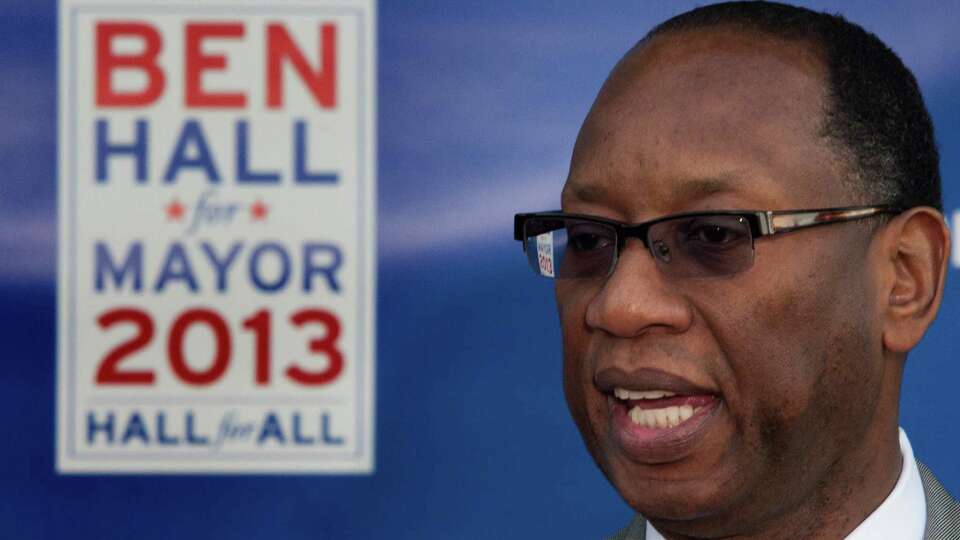
So most of the ad is just foolish and ill-informed. Who knows if that's because Hall is ignorant about the issues or he (rightly) assumes the voters are. My bet would be the latter but you never can tell. Having worked for dozens of candidates over the years (Grits spent 14 years as a professional opposition researcher for candidates from both parties as well as non-partisan races like the Houston mayoral contest), I've long ago ceased to be surprised how ill-prepared many candidates are when they decide to run for office. It's entirely possible this fellow believes his own bullshit.
What gagged me most, though, was Hall's grinning, wink and a nod attitude toward diminishing constitutional rights. The Mayor takes an oath to uphold the Constitution so it's a bit surreal to see a candidate pledging to do all he can to circumvent it. Imagine his swearing in ceremony:
Judge: Do you pledge to uphold and defend the Constitution of the United States?Grits found Hall's cloying demeanor in the ad, promising laughably inartful policies "just barely within the bounds of the Constitution," not just off putting but offensive.
Mayor Hall: Just barely.
We'll find out in November, but I seriously doubt this strategy will succeed for Mr. Hall. A recently released Texas Lyceum poll (Q4) asked voters to list the most important issues facing the country and the number saying "crime and drugs" came in at less than one-half of one percent. The relative lack of concern about crime by voters combined with the ham-handed, unworkable solutions proposed by Mr. Hall to me indicate the challenger hasn't chosen a particularly strong campaign message.
MORE: See Kuff and Texpatriate for analyses of the horse-race polling, which presently favors the incumbent by a significant but (theoretically) not-insurmountable margin.
Charles Kuffner last month posted this analysis of Hall's "five point crime fighting plan."
I've never met the man, but it seems an open question whether this ad reflects pure, disingenuous demagoguery or mere simple-mindedness. Hall told Mike Morris from the Houston Chronicle (Sept. 10) that he doesn't want crime discussions to focus on the past, which is understandable given Houston's recent record of declining crime:
Data show crime has been falling nationally. In Houston, burglaries reached a recent peak of 29,279 in 2009, and have fallen each year since, with last year's total the lowest since 2003. Despite the increase in murders and robberies from 2011 to 2012, Houston's violent crime rate last year was its lowest since 1985, and last year's murder total of 217 is half what it was 20 years ago.So crime has declined during Mayor Parker's tenure, though I'd agree with Prof. Snell that, given the national crime decline and the wide variety of factors at play, one would be hard pressed to give any one local politician credit. Still, in context, it seems hard to justify assigning Mayor Parker blame.
University of Houston-Downtown criminal justice professor Clete Snell dismissed both Hall and Parker's posturing. The shaky reliability of crime data is well known to researchers, he said.
"To take advantage of a decline in crime politically or to try to use an increase in crime politically, I think, indicates a lack of knowledge about how the statistics are developed," Snell said. "There's just many, many factors that can impact the rise or decline in crime."
The other suggestions reveal more about Mr. Hall's misunderstanding of the criminal-justice system than they do potential crime solutions. For example, does he fantasize that chain-gang crews cleaning the city or cutting weeds outside the jail won't need to be supervised by additional Sheriff's deputies? Or that the mayor has authority to make county government enact these schemes? Clearly he didn't check with the Sheriff's office about the idea. Morris' article had this to say on the subject:
Next, to Hall's suggestion for expanding street-level surveillance tech instead of hiring more cops: Who would monitor all these new surveillance cameras? If it's police, wouldn't you need more cops to staff surveillance stations? And wouldn't that take more cops off the beat? If not police, then who would watch the monitors, who would pay for it, and what would prevent those surveillance resources from being misused? Responding to the ad, a Parker aide told the Chronicle that "there are many cameras downtown already and that a lack of manpower to monitor them makes it a more effective tool for gathering evidence after a crime occurs than in preventing it." Truth is, with limited exceptions, government surveillance cameras don't reduce crime and aren't even all that useful for investigating crime after the fact: After the Boston marathon bombings, one recalls, it wasn't city surveillance that captured the culprits, even though cameras were in place, but security video volunteered from nearby stores and cell-phone pics taken by bystanders. In more workaday settings, cameras can be vandalized or defeated by simple ploys like wearing hats, hoodies, or sunglasses. From a crime-fighting perspective, government surveillance cameras are a cost-benefit nightmare.As for Hall's plan to have inmates work off their sentences instead of sitting in their cells, Parker campaign spokeswoman Sue Davis said city inmates stay an average of 24 hours before being released or transferred to the county lockup, making it impractical to put them to work.
Hall said it is the same taxpayers footing the bill, regardless of the jail. He said he is interested in finding a way to put county or city inmates to work on behalf of the public.
"While we'd always want to work with the city to maximize that resource, there's not a lot of room for expansion," said Alan Bernstein, spokesman for Sheriff Adrian Garcia, who runs the county jail.
All low-level, nonviolent county jail inmates willing and eligible to participate in outside work already do so, Bernstein said. As of Monday, 196 inmates were approved for outside work, performing graffiti abatement, tree planting and beautification along bayous and other public rights of way, Bernstein said. That number is difficult to increase because more inmates - 793, on Monday - are needed inside the jail for chores the county otherwise would have to pay for, he said.
So most of the ad is just foolish and ill-informed. Who knows if that's because Hall is ignorant about the issues or he (rightly) assumes the voters are. My bet would be the latter but you never can tell. Having worked for dozens of candidates over the years (Grits spent 14 years as a professional opposition researcher for candidates from both parties as well as non-partisan races like the Houston mayoral contest), I've long ago ceased to be surprised how ill-prepared many candidates are when they decide to run for office. It's entirely possible this fellow believes his own bullshit.
What gagged me most, though, was Hall's grinning, wink and a nod attitude toward diminishing constitutional rights. The Mayor takes an oath to uphold the Constitution so it's a bit surreal to see a candidate pledging to do all he can to circumvent it. Imagine his swearing in ceremony:
Judge: Do you pledge to uphold and defend the Constitution of the United States?Grits found Hall's cloying demeanor in the ad, promising laughably inartful policies "just barely within the bounds of the Constitution," not just off putting but offensive.
Mayor Hall: Just barely.
We'll find out in November, but I seriously doubt this strategy will succeed for Mr. Hall. A recently released Texas Lyceum poll (Q4) asked voters to list the most important issues facing the country and the number saying "crime and drugs" came in at less than one-half of one percent. The relative lack of concern about crime by voters combined with the ham-handed, unworkable solutions proposed by Mr. Hall to me indicate the challenger hasn't chosen a particularly strong campaign message.
MORE: See Kuff and Texpatriate for analyses of the horse-race polling, which presently favors the incumbent by a significant but (theoretically) not-insurmountable margin.

No comments:
Post a Comment