Paging Mark Bennett: You were right; the prosecutors were wrong.
In a surprising decision - both for its unanimous outcome and the unlikely reference to Miley Cyrus "twerking" in a Texas judicial opinion - the Court of Criminal Appeals today declared Texas Penal Code §33.021(b), criminalizing online solicitation of a minor, "facially unconstitutional" in a habeas corpus writ styled Ex Parte John Christopher Lo. See their unanimous opinion (pdf) written by Judge Cathy Cochran which ruled that the statute is "overbroad because it prohibits a wide array of constitutionally protected speech and is not narrowly drawn to achieve only the legitimate objective of protecting children from sexual abuse." Bennett had earlier opined:
The court opined that the overbroad statute would criminalize many common, even historically important artistic works, not to mention ubiquitous images of Miley Cyrus "twerking":
Strong stuff. For once, instead of bucking US Supreme Court opinions, the CCA simply applied them and reached a conclusion that closely tracks federal First Amendment case law. Kudos to the court for not dodging the issue.
MORE: See coverage from the Austin Statesman, the Houston Chronicle, and the Volokh Conspiracy.
AND MORE: Mark Bennett, the attorney who argued the case before the CCA, now has two blog posts up about it:
FOLLOWUP: What happens to people convicted under now-unconstitutional online solicitation statute?
In a surprising decision - both for its unanimous outcome and the unlikely reference to Miley Cyrus "twerking" in a Texas judicial opinion - the Court of Criminal Appeals today declared Texas Penal Code §33.021(b), criminalizing online solicitation of a minor, "facially unconstitutional" in a habeas corpus writ styled Ex Parte John Christopher Lo. See their unanimous opinion (pdf) written by Judge Cathy Cochran which ruled that the statute is "overbroad because it prohibits a wide array of constitutionally protected speech and is not narrowly drawn to achieve only the legitimate objective of protecting children from sexual abuse." Bennett had earlier opined:
The CCA unanimously agreed, finding that, unlike statutes in other states, Texas' law "prohibits and punishes speech based on its content." The legislation was supposedly crafted to cover those who "engage in conversations over the Internet with the intent of meeting a minor for sexual activities." But the court found that the statute as written "punishes, as a third-degree felony, salacious speech over the internet (but not "dirty talk" spoken face-to-face) and the distribution of sexually explicit materials over the internet (but not the distribution of those same materials hand-to-hand) to a minor as long as the actor has the intent to arounse or gratify anyone's sexual desires. It does not require that the actor ever have any intent to meet the minor for any reason."it is my opinion that this statute violates the First Amendment by criminalizing protected communications between adults.
There is no requirement that the person on the other end of the line be a child, or even that the actor believe the person on the other end of the line to be a child. So the statute criminalizes dirty talk between adults if one of them is pretending to be a child — even if the other one knows that the other is just pretending.
Because it reaches constitutionally protected speech (for example, sexually explicit communication between two grown-ups playing “naughty teenager” on the internet — both could be prosecuted), the Online Solicitation of a Minor statute is overbroad and unconstitutional.
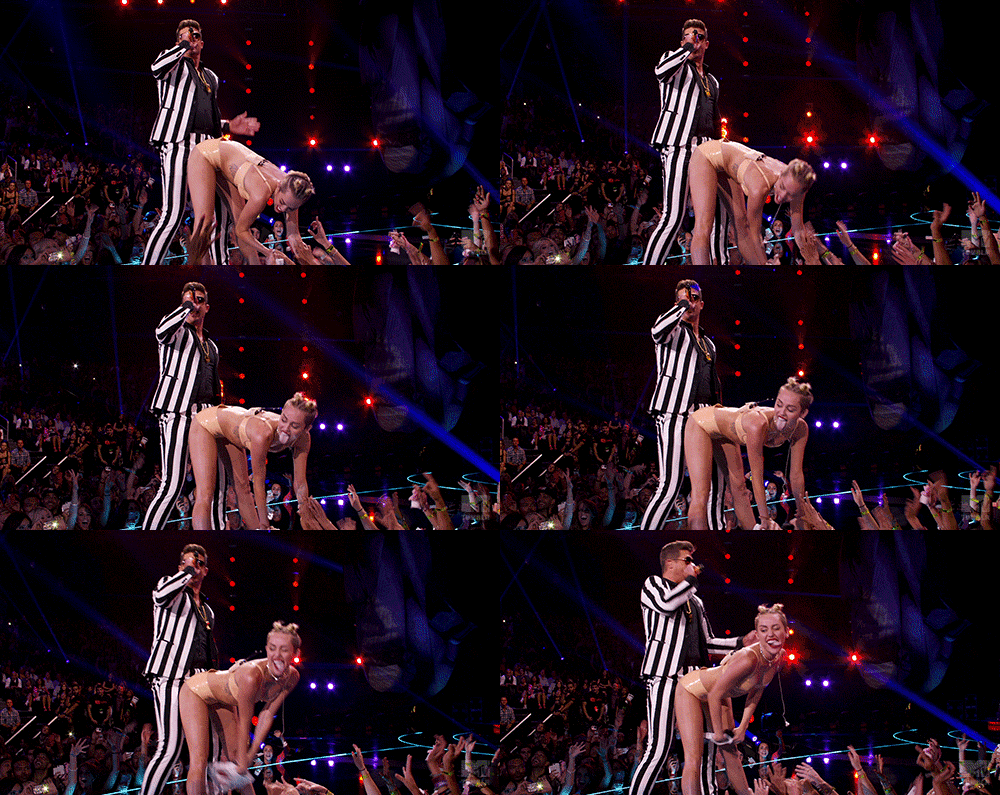
The court opined that the overbroad statute would criminalize many common, even historically important artistic works, not to mention ubiquitous images of Miley Cyrus "twerking":
The Court did find that there is a "compelling state interest" in prohibiting online solicitation of minors but that the law as written is "not narrowly drawn." Bottom line, said the court, "everything that Section 33.021(b) prohibits and punishes is speech and is either already prohibited by other statutes (such as obscenity, distributing harmful material to minors, solicitation of a minor, or child pornography) or is constitutionally protected." (Emphasis in original.)Subsection (b) covers a whole cornucopia of "titillating talk" or "dirty talk." but it also includes sexually explicit literature such as "Lolita," "50 Shades of Grey," "Lady Chatterly's Lover," and Shakespeare's "Troilus and Cressida." It includes sexually explicit television shows, movies, and performances such as "The Tudors," "Rome," "Eyes Wide Shut," "Basic Instinct," Janet Jackson's "Wardrobe Malfunction" during the 2004 Super Bowl, and Miley Cyrus' "twerking" during the 2013 MTV Video Music Awards." It includes sexually explicit art such as "The Rape of the Sabine Women," "Venus De Milo," "the Naked Maja," or Japaneses Shunga. Communications and materials that, in some manner, "relate to" sexual conduct comprise much of the art, literature and entertainment of the world from the time of the Greek myths extolling Zeus's sexual prowess, through the ribald plays of the Renaissance, to today's Hollywood movies and cable TV shows.
Strong stuff. For once, instead of bucking US Supreme Court opinions, the CCA simply applied them and reached a conclusion that closely tracks federal First Amendment case law. Kudos to the court for not dodging the issue.
MORE: See coverage from the Austin Statesman, the Houston Chronicle, and the Volokh Conspiracy.
AND MORE: Mark Bennett, the attorney who argued the case before the CCA, now has two blog posts up about it:
FOLLOWUP: What happens to people convicted under now-unconstitutional online solicitation statute?
In a surprising decision - both for its unanimous outcome and the unlikely reference to Miley Cyrus "twerking" in a Texas judicial opinion - the Court of Criminal Appeals today declared Texas Penal Code §33.021(b), criminalizing online solicitation of a minor, "facially unconstitutional" in a habeas corpus writ styled Ex Parte John Christopher Lo. See their unanimous opinion (pdf) written by Judge Cathy Cochran which ruled that the statute is "overbroad because it prohibits a wide array of constitutionally protected speech and is not narrowly drawn to achieve only the legitimate objective of protecting children from sexual abuse." Bennett had earlier opined:
The CCA unanimously agreed, finding that, unlike statutes in other states, Texas' law "prohibits and punishes speech based on its content." The legislation was supposedly crafted to cover those who "engage in conversations over the Internet with the intent of meeting a minor for sexual activities." But the court found that the statute as written "punishes, as a third-degree felony, salacious speech over the internet (but not "dirty talk" spoken face-to-face) and the distribution of sexually explicit materials over the internet (but not the distribution of those same materials hand-to-hand) to a minor as long as the actor has the intent to arounse or gratify anyone's sexual desires. It does not require that the actor ever have any intent to meet the minor for any reason."it is my opinion that this statute violates the First Amendment by criminalizing protected communications between adults.
There is no requirement that the person on the other end of the line be a child, or even that the actor believe the person on the other end of the line to be a child. So the statute criminalizes dirty talk between adults if one of them is pretending to be a child — even if the other one knows that the other is just pretending.
Because it reaches constitutionally protected speech (for example, sexually explicit communication between two grown-ups playing “naughty teenager” on the internet — both could be prosecuted), the Online Solicitation of a Minor statute is overbroad and unconstitutional.
The court opined that the overbroad statute would criminalize many common, even historically important artistic works, not to mention ubiquitous images of Miley Cyrus "twerking":
The Court did find that there is a "compelling state interest" in prohibiting online solicitation of minors but that the law as written is "not narrowly drawn." Bottom line, said the court, "everything that Section 33.021(b) prohibits and punishes is speech and is either already prohibited by other statutes (such as obscenity, distributing harmful material to minors, solicitation of a minor, or child pornography) or is constitutionally protected." (Emphasis in original.)Subsection (b) covers a whole cornucopia of "titillating talk" or "dirty talk." but it also includes sexually explicit literature such as "Lolita," "50 Shades of Grey," "Lady Chatterly's Lover," and Shakespeare's "Troilus and Cressida." It includes sexually explicit television shows, movies, and performances such as "The Tudors," "Rome," "Eyes Wide Shut," "Basic Instinct," Janet Jackson's "Wardrobe Malfunction" during the 2004 Super Bowl, and Miley Cyrus' "twerking" during the 2013 MTV Video Music Awards." It includes sexually explicit art such as "The Rape of the Sabine Women," "Venus De Milo," "the Naked Maja," or Japaneses Shunga. Communications and materials that, in some manner, "relate to" sexual conduct comprise much of the art, literature and entertainment of the world from the time of the Greek myths extolling Zeus's sexual prowess, through the ribald plays of the Renaissance, to today's Hollywood movies and cable TV shows.
Strong stuff. For once, instead of bucking US Supreme Court opinions, the CCA simply applied them and reached a conclusion that closely tracks federal First Amendment case law. Kudos to the court for not dodging the issue.
MORE: See coverage from the Austin Statesman, the Houston Chronicle, and the Volokh Conspiracy.
AND MORE: Mark Bennett, the attorney who argued the case before the CCA, now has two blog posts up about it:
FOLLOWUP: What happens to people convicted under now-unconstitutional online solicitation statute?

No comments:
Post a Comment