Before this blog takes a few days off for the holiday, let's round up a few items that merit Grits readers' attention:
'12,000 days later, Texas still won't release Jerry Hartfield from custody'
This is just pathetic. Conviction overturned, a new trial ordered, then 33 years in prison without any additional movement on his case.
Audits coming for county court costs
The Office of Court Administration will begin auditing counties' court collection reporting for data integrity as a result of recommendations from the state auditor. See here for more recommendations and the full report.
Good news: Gubernatorial candidate calls for red-light camera ban
The bad news: It wasn't Greg Abbott.
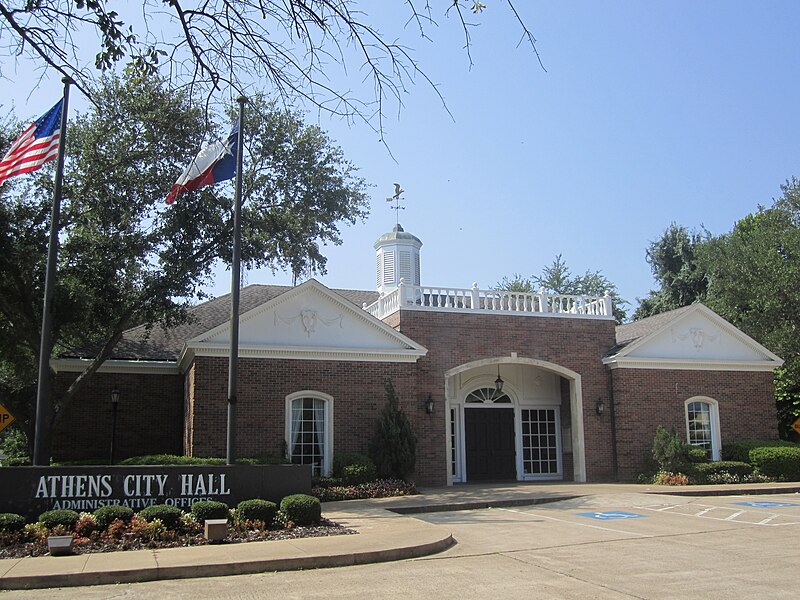
Scheck: 'I've been to Athens'
 Barry Scheck of the national Innocence Project praised the Texas Legislature at a recent event in Houston for its willingness to pass innocence reforms, the Houston Press reported. While this comment bordered on hyperbole - "I went back to New York and told them, 'You won't believe this! I have been to Athens. They have a real democracy in Texas. You can actually get things done'"- it's true that, to my knowledge, Texas has passed more innocence-related legislation than any other state. Of course, we started with one of the most slanted, unfair systems in the country so we had (and have) a long way to go to catch up. (Ask Jerry Hartfield.)
Brennan Center Byrne grant recommendations behind the curve
The Brennan Center issued a new report suggesting improved performance measures for the federal Byrne grant program and establishing program goals aimed at reining in drug task forces whose focus on low-level drug busts contribute to over-incarceration. See the press release and the full report. Strangely, the report doesn't mention Texas' experience. In 2005, legislation by state Sen. Juan "Chuy" Hinojosa put drug task forces under DPS management and the agency implemented performance measures of just the sort the report advocates. When the task forces couldn't (or really, wouldn't) meet them, Gov. Rick Perry pulled the plug on their funding, shifting resources to specialty courts, diversion programs and border security. Back when I worked for ACLU of Texas, your correspondent authored a pair of public policy reports in 2002 and 2004 (see here and here) advocating for the establishment of better performance measures and the abolition of Texas' drug task forces, though none of that work was acknowledged in the Brennan Center report, which all in all struck me as about a decade behind the curve compared to debates over these issues in Texas.
Hope for probation reform
Check out this PBS News presentation on a strong probation initiative out of Hawaii called the "Hope program" which embodies most of the reforms Grits would like to see in Texas' probation system: Closer supervision of probationers for shorter time periods, with swift and certain consequences for probation violators short of actually revoking them to prison. As a criminologist in the story described the program, "What they have done with the HOPE model has been to ratchet down the level of penalty so that it's something you can actually afford to do and then ratchet up the likelihood that if you engage in misconduct, you will actually experience that penalty."
'12,000 days later, Texas still won't release Jerry Hartfield from custody'
This is just pathetic. Conviction overturned, a new trial ordered, then 33 years in prison without any additional movement on his case.
Audits coming for county court costs
The Office of Court Administration will begin auditing counties' court collection reporting for data integrity as a result of recommendations from the state auditor. See here for more recommendations and the full report.
Good news: Gubernatorial candidate calls for red-light camera ban
The bad news: It wasn't Greg Abbott.
Scheck: 'I've been to Athens'
Brennan Center Byrne grant recommendations behind the curve
The Brennan Center issued a new report suggesting improved performance measures for the federal Byrne grant program and establishing program goals aimed at reining in drug task forces whose focus on low-level drug busts contribute to over-incarceration. See the press release and the full report. Strangely, the report doesn't mention Texas' experience. In 2005, legislation by state Sen. Juan "Chuy" Hinojosa put drug task forces under DPS management and the agency implemented performance measures of just the sort the report advocates. When the task forces couldn't (or really, wouldn't) meet them, Gov. Rick Perry pulled the plug on their funding, shifting resources to specialty courts, diversion programs and border security. Back when I worked for ACLU of Texas, your correspondent authored a pair of public policy reports in 2002 and 2004 (see here and here) advocating for the establishment of better performance measures and the abolition of Texas' drug task forces, though none of that work was acknowledged in the Brennan Center report, which all in all struck me as about a decade behind the curve compared to debates over these issues in Texas.
Hope for probation reform
Check out this PBS News presentation on a strong probation initiative out of Hawaii called the "Hope program" which embodies most of the reforms Grits would like to see in Texas' probation system: Closer supervision of probationers for shorter time periods, with swift and certain consequences for probation violators short of actually revoking them to prison. As a criminologist in the story described the program, "What they have done with the HOPE model has been to ratchet down the level of penalty so that it's something you can actually afford to do and then ratchet up the likelihood that if you engage in misconduct, you will actually experience that penalty."
'12,000 days later, Texas still won't release Jerry Hartfield from custody'
This is just pathetic. Conviction overturned, a new trial ordered, then 33 years in prison without any additional movement on his case.
Audits coming for county court costs
The Office of Court Administration will begin auditing counties' court collection reporting for data integrity as a result of recommendations from the state auditor. See here for more recommendations and the full report.
Good news: Gubernatorial candidate calls for red-light camera ban
The bad news: It wasn't Greg Abbott.
Scheck: 'I've been to Athens'
Brennan Center Byrne grant recommendations behind the curve
The Brennan Center issued a new report suggesting improved performance measures for the federal Byrne grant program and establishing program goals aimed at reining in drug task forces whose focus on low-level drug busts contribute to over-incarceration. See the press release and the full report. Strangely, the report doesn't mention Texas' experience. In 2005, legislation by state Sen. Juan "Chuy" Hinojosa put drug task forces under DPS management and the agency implemented performance measures of just the sort the report advocates. When the task forces couldn't (or really, wouldn't) meet them, Gov. Rick Perry pulled the plug on their funding, shifting resources to specialty courts, diversion programs and border security. Back when I worked for ACLU of Texas, your correspondent authored a pair of public policy reports in 2002 and 2004 (see here and here) advocating for the establishment of better performance measures and the abolition of Texas' drug task forces, though none of that work was acknowledged in the Brennan Center report, which all in all struck me as about a decade behind the curve compared to debates over these issues in Texas.
Hope for probation reform
Check out this PBS News presentation on a strong probation initiative out of Hawaii called the "Hope program" which embodies most of the reforms Grits would like to see in Texas' probation system: Closer supervision of probationers for shorter time periods, with swift and certain consequences for probation violators short of actually revoking them to prison. As a criminologist in the story described the program, "What they have done with the HOPE model has been to ratchet down the level of penalty so that it's something you can actually afford to do and then ratchet up the likelihood that if you engage in misconduct, you will actually experience that penalty."

Are you in need of a loan? Do you want to pay off your bills? Do you want to be financially stable? All you have to do is to contact us for more information on how to get started and get the loan you desire. This offer is open to all that will be able to repay back in due time. Note-that repayment time frame is negotiable and at interest rate of 3% just email us (urgentloan22@gmail.com)
ReplyDelete